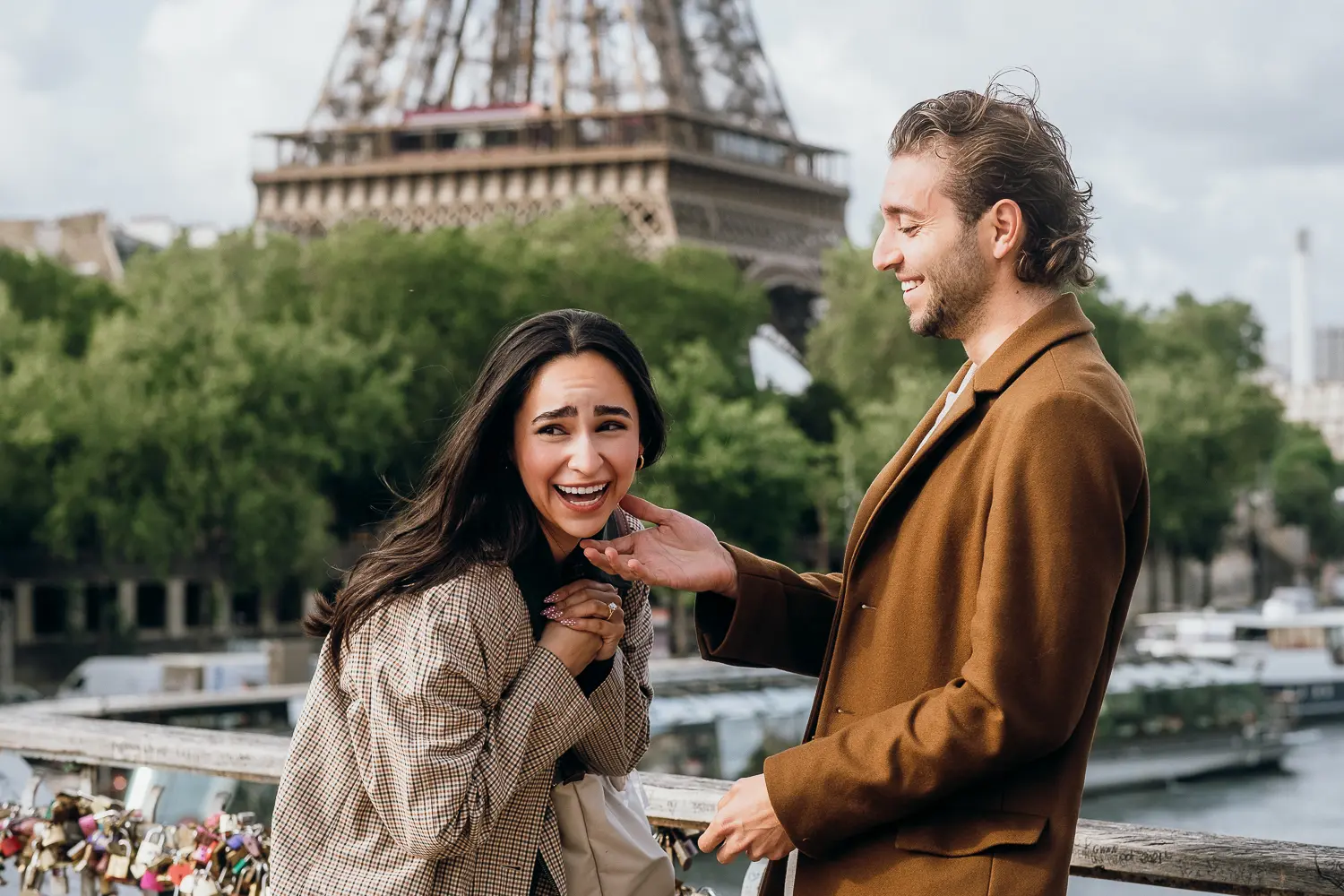
Most people who write to us about a surprise proposal ask the same question within the first two emails, usually phrased apologetically, as though it’s a strange thing to want to know.
How will you be there without her seeing you?
It’s the right question. The whole thing depends on it. So here is exactly how it works — the cover stories, the signals, where we hide, and what happens in the twenty minutes before you kneel.
If you’re planning something and you’d rather just talk it through, write to us. We do this most weeks, and we like the planning as much as the photographing.
The short version
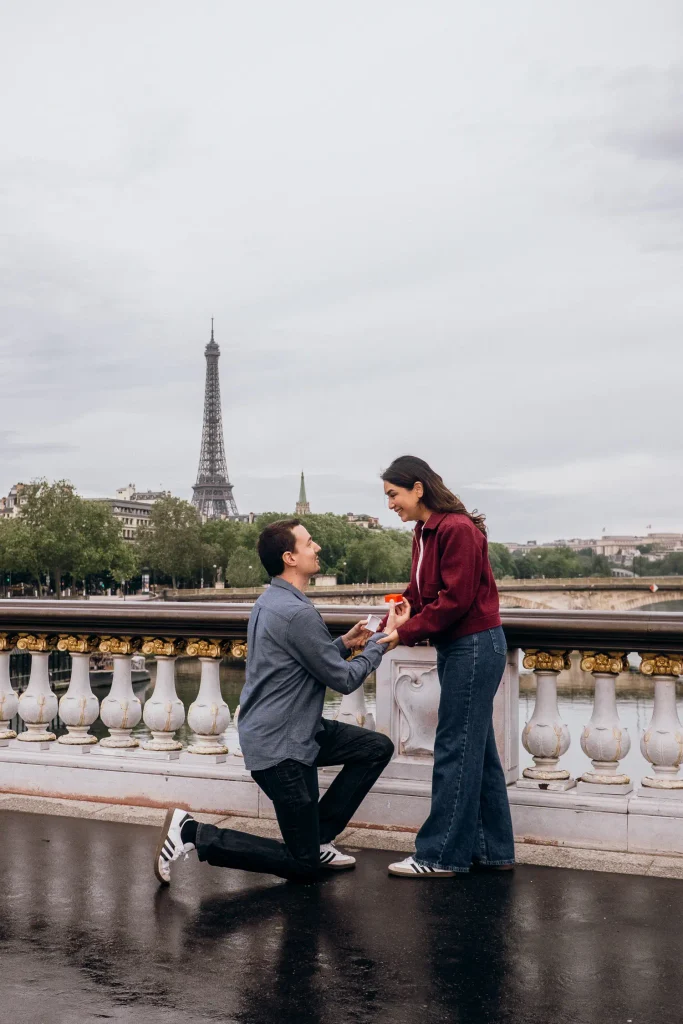
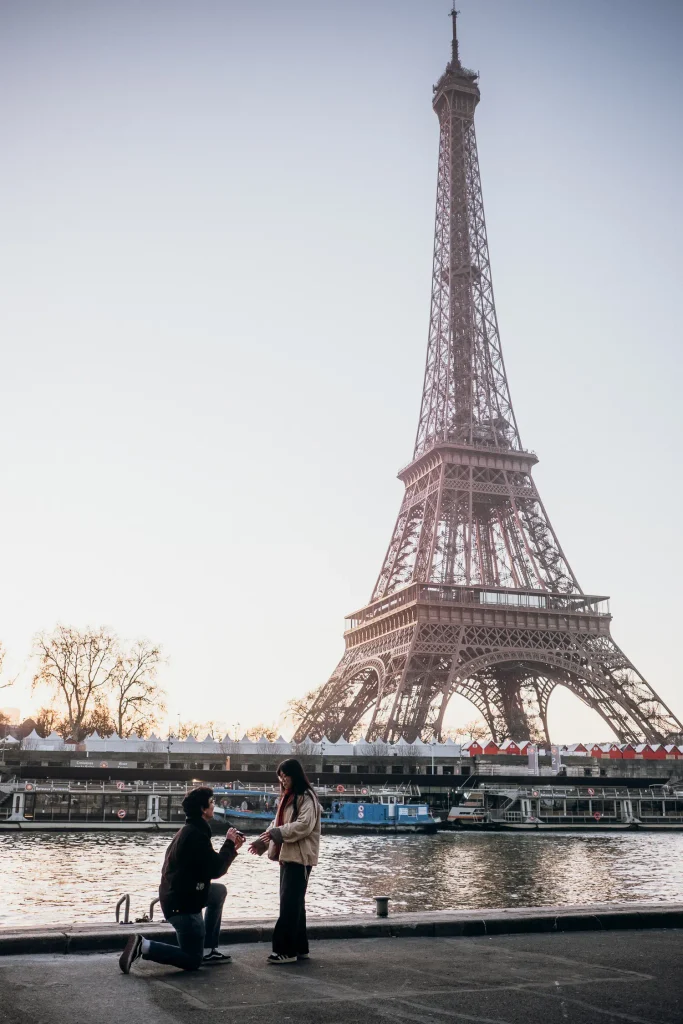
You arrive at an agreed place at an agreed time. We’re already there, at a distance, looking like tourists taking pictures. You give a small signal. You propose. We photograph everything from the moment you arrive until well after.
Then we walk over, introduce ourselves, and — if you’d like — take proper photographs of the two of you in the first minutes of being engaged.
Your partner has no idea until it’s over. That’s the whole job.
Choosing your cover story
The proposal itself is easy. Getting your partner to the right place at the right time, in an outfit they feel good in, without suspicion — that’s the part that needs thought.
Some that work well:
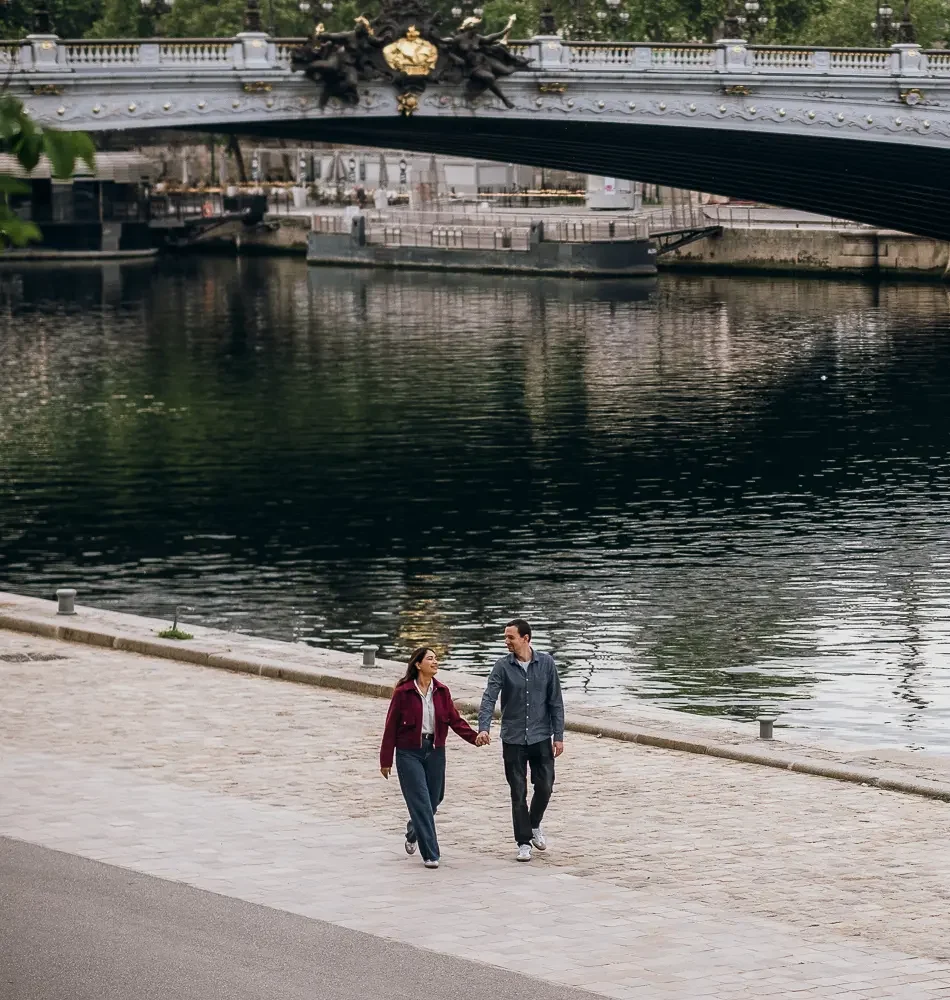
The sunrise walk. You’re in Paris, you want to see the city before it wakes up, you’ve heard the riverbanks close to the Eiffel Tower are extraordinary at dawn. Completely plausible, and it puts you somewhere beautiful and nearly empty.
Breakfast reservation. You’ve booked somewhere for eight, and you’re walking there. The walk happens to pass a bridge.
The tourist thing. You just want a photo together in front of the tower, like everyone else. Ask a stranger — except the stranger is us, standing nearby, already photographing.
A couples photoshoot they know about. This one is worth its own section, below.
The last morning. You fly home tomorrow, and you want one more walk. Slightly wistful, entirely convincing.
What doesn’t work: anything unusually elaborate. A surprise picnic at 6 am, a suddenly booked helicopter, an insistence on a specific bench. If your partner knows you well, out-of-character behaviour is what gives it away — not the photographer standing a few meters off.
The best cover story is the least interesting one.
The photoshoot cover story
This deserves its own section because it’s the most reliable approach we know, and it solves a problem the others don’t.
You tell your partner you’ve booked a couples photoshoot in Paris. Which is true. They know a photographer will be there, they dress for it, they arrive expecting to be photographed. Nothing is odd.
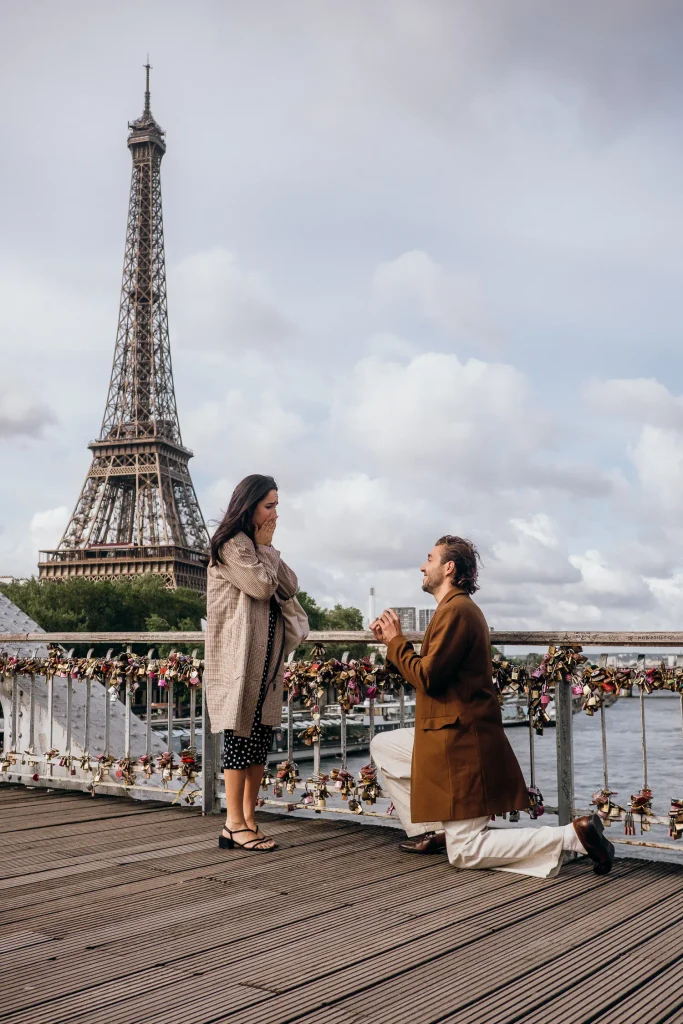
We meet you both, we start shooting as a normal session, and twenty minutes in — at a moment you and we have agreed on — you propose.
What this gets you:
- No suspicion at all, because the photographer is expected
- Your partner in an outfit they chose and feel good in, having done their hair
- Twenty minutes of warming up, so the photographs afterwards aren’t stiff
- Us close enough to catch the small things — the face, the hands, the tears — rather than working entirely from a distance
What you give up: the pure documentary quality of a genuinely hidden camera. Some people want the photographs to show a completely unguarded moment with no awareness of a lens. Both are lovely. They’re just different.
If you’re unsure which suits you, tell us about your partner, and we’ll tell you honestly which we’d recommend.
How we hide
For a fully secret proposal, these are the mechanics.
We arrive early. Usually twenty to thirty minutes before you, so we can see where the light is, where the crowds are, and where we’ll be standing.
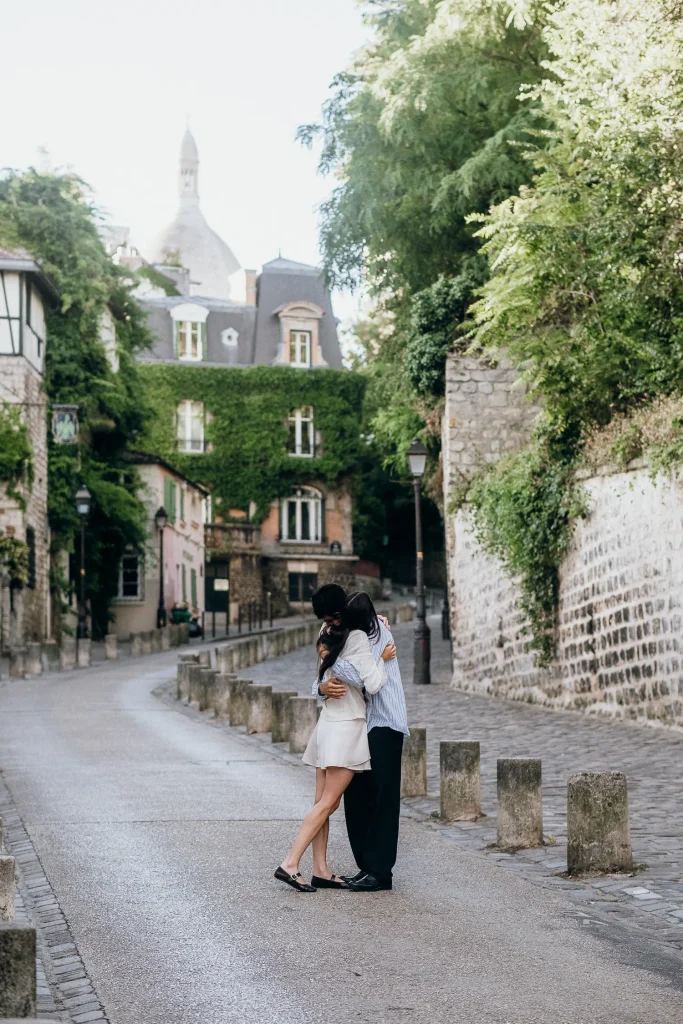
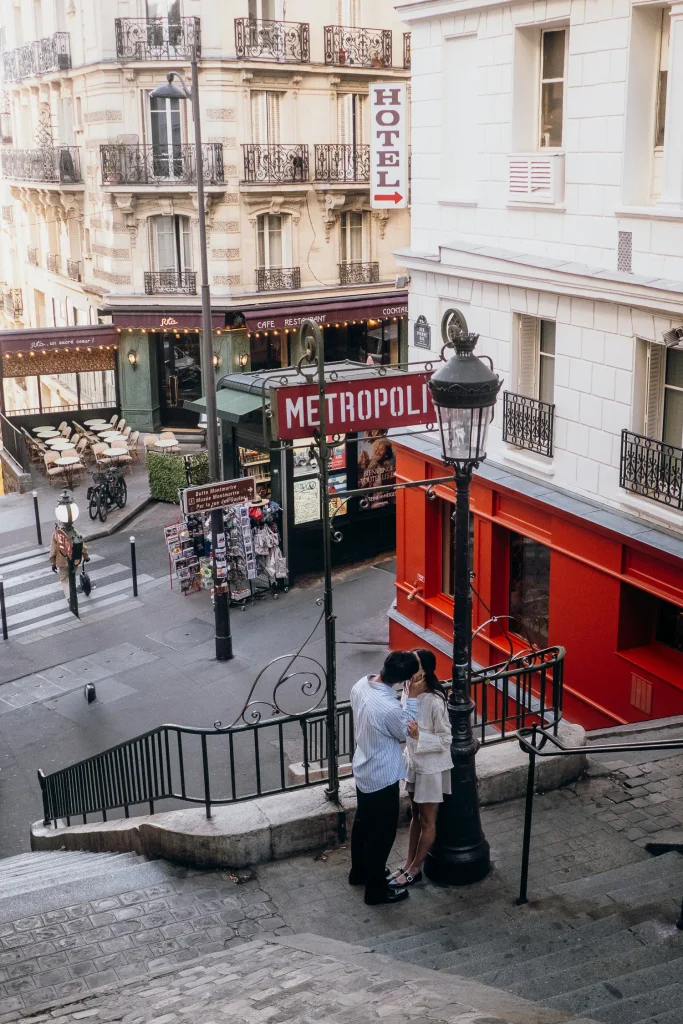
We work from a distance. Typically ten to twenty meters. Far enough to be invisible, close enough for the frames to be intimate.
We look like tourists. People with a camera in Paris are the least remarkable thing in the city. We photograph the bridge. We photograph the tower. We photograph you, and nobody notices the difference.
We never make eye contact with either of you. Not a glance, not a nod. This is the mistake that gives it away, and it’s why we agree on everything in advance rather than improvising on the day.
We’re already shooting before you arrive. So the walk up, the pause, the moment before — all of it is on camera. Those frames matter more than people expect.
The signal
You need a way to tell us now without saying anything. We’ll agree on one in advance. It’s small, and it’s something you’d plausibly do anyway.
Common ones: taking off a hat. Putting a hand in your left pocket. Stopping at a particular lamppost. Adjusting a scarf.
The rule: it has to be something your partner wouldn’t register. Which means no waving, no looking around for us, and no checking whether we’ve seen it. Give the signal, then forget about us entirely. We’re watching, and we won’t miss it.
The meeting point
Precision matters more here than anywhere else. Not “by the Eiffel Tower.” Not “at Trocadéro.”
We’ll agree on an exact spot — a specific step, a particular lamppost, the third arch from the eastern end. Then we’ll send you a photograph of it, so you’re standing in the right place without hesitating or looking lost.
We’ll also agree on a backup. Paris is unpredictable: a film crew appears, an area is closed, a demonstration reroutes the morning. The backup is usually a two-minute walk away, and we’ll have photographed that too.
Timing
Sunrise, almost always. The landmarks are near-empty, the light is soft, and there’s nobody behind you in the photographs. A proposal at Trocadéro at 6.40 am is an entirely different experience from the same spot at eleven.
Allow a buffer. We’ll ask you to arrive within a ten-minute window rather than at an exact minute, so you’re not rushing or checking your watch.
Don’t propose in the first thirty seconds. Arrive, walk, look at the view, let your partner settle. Those photographs are part of the story, and the moment lands better after a pause.
What happens straight afterwards
This is the part people forget to plan, and it’s often the best half hour of the session.
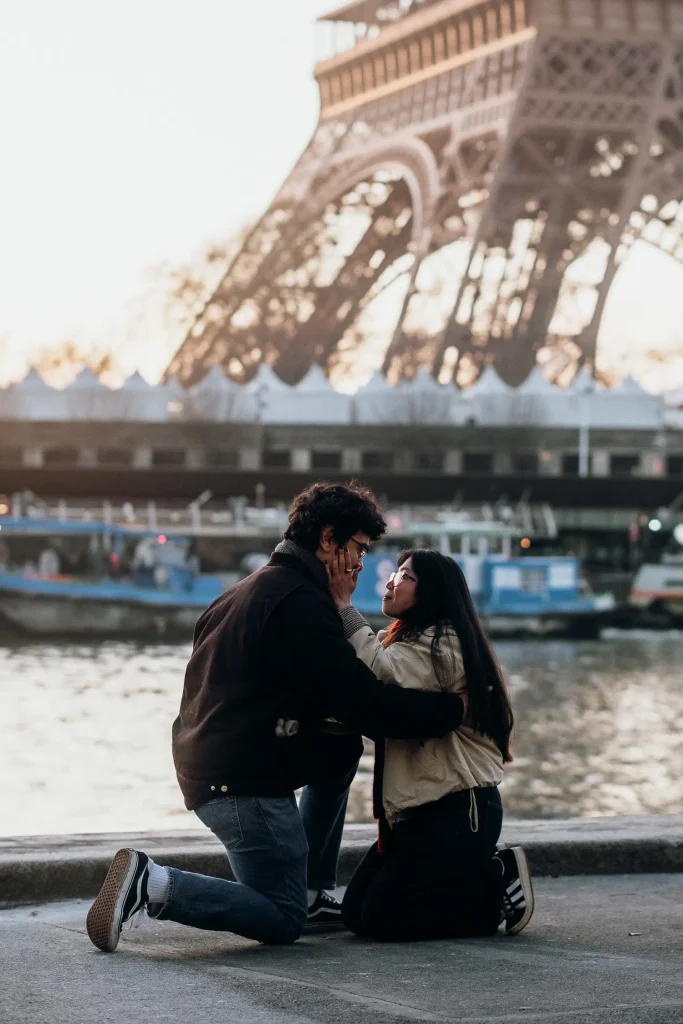
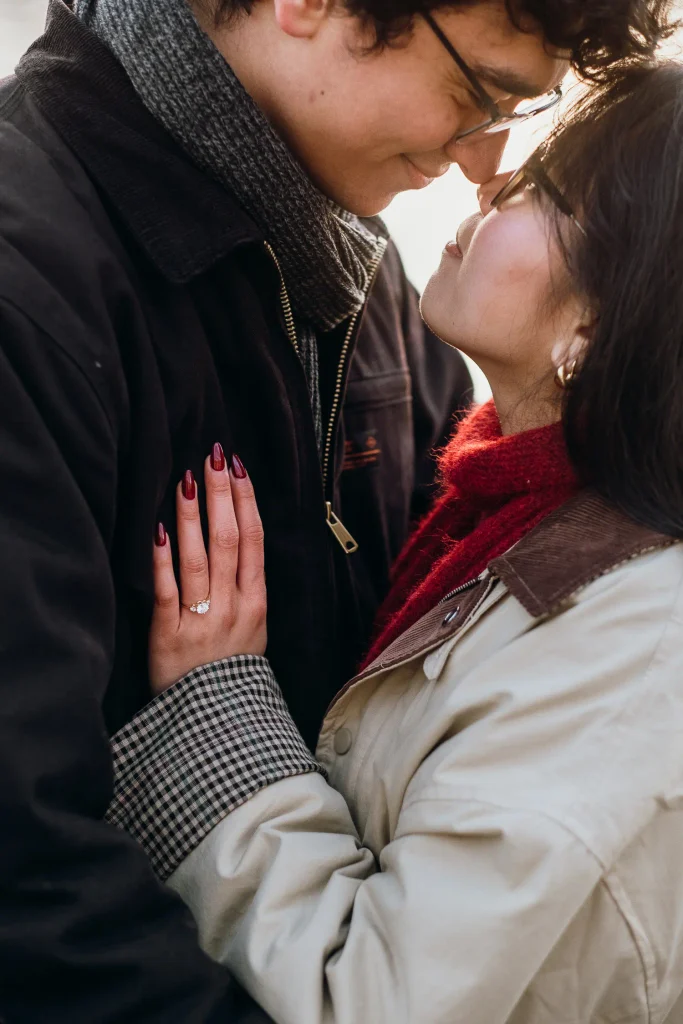
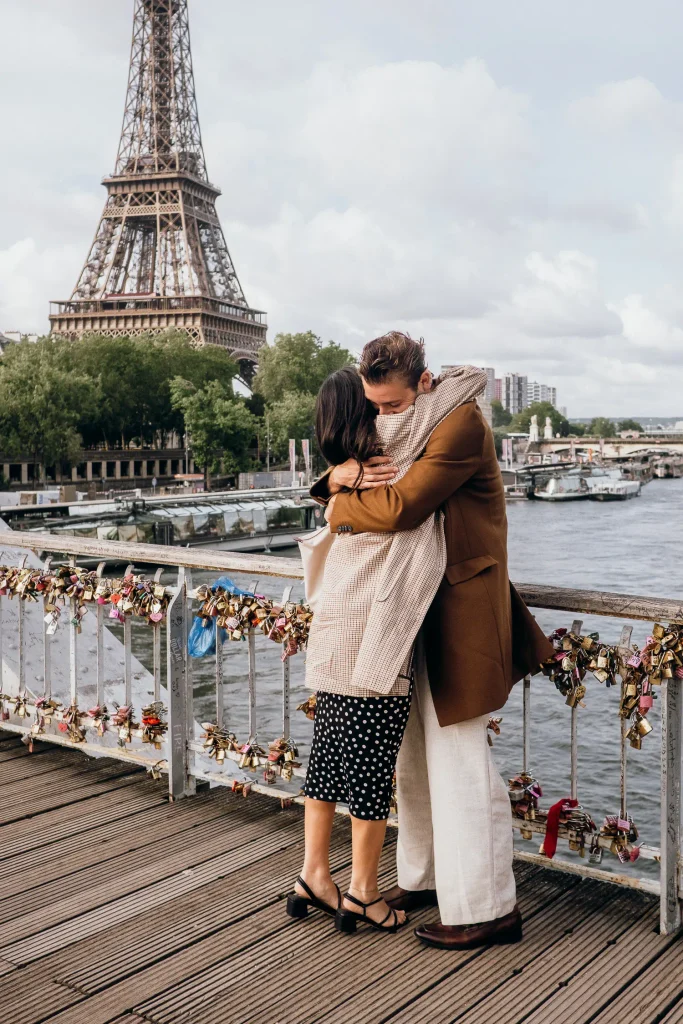
We keep photographing through the reaction — the hands, the ring, the phone call to her mother, the sitting down on a step because her legs have gone.
Then we walk over and introduce ourselves. There’s usually a laugh, occasionally a small shriek, and quite often someone says “wait, you were there the whole time?”
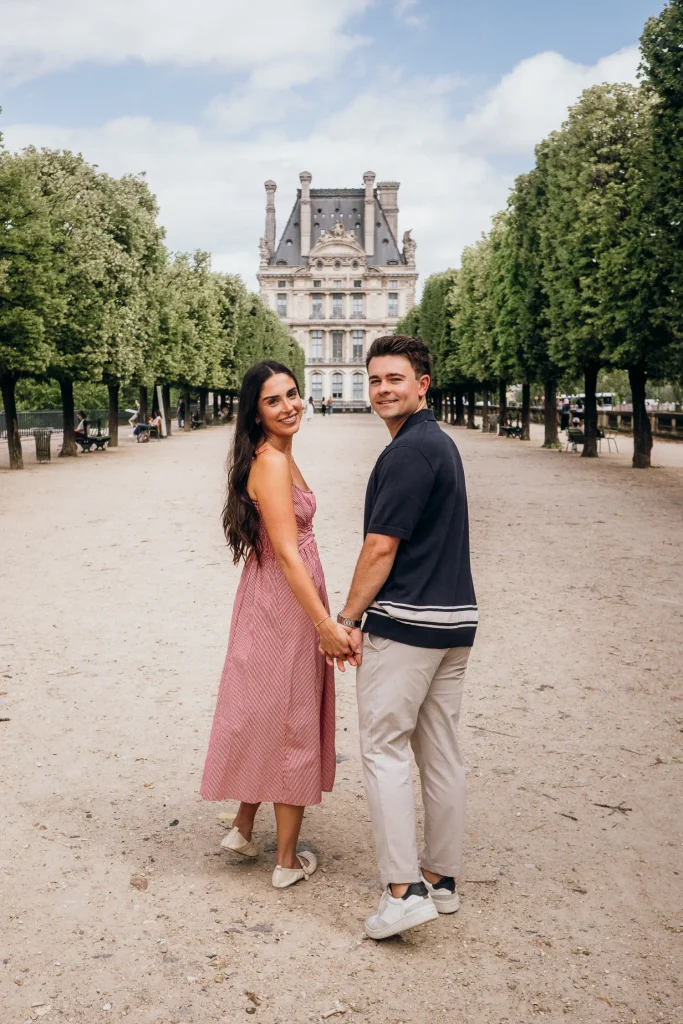
If you’ve booked time beyond the proposal itself, we then do a proper session — the two of you, newly engaged, still slightly stunned. These are frequently the photographs people love most, because nobody has to be told to look happy.
Our honest recommendation: book more time than the proposal needs. Thirty minutes captures the moment. An hour or two gives you the moment and the first hour of being engaged, which you’ll only have once. Session lengths and prices here.
Where to do it
Our two most recommended, for different reasons:
Pont Alexandre III — grand, gilded, theatrical, and wide enough that we can work from a real distance. The gold catches early light extraordinarily well. This is the classic. (See Route 6.)
The lower quays of Île Saint-Louis — down stone steps to water level, the Seine beside you, almost nobody there. For people who want privacy over grandeur. (See Route 2.)
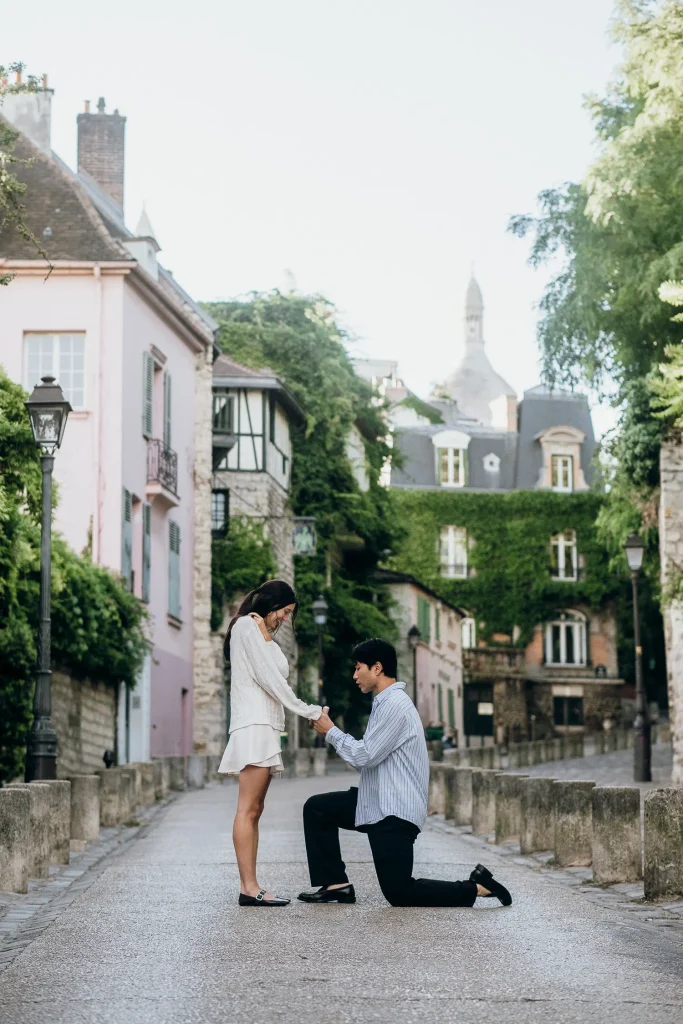
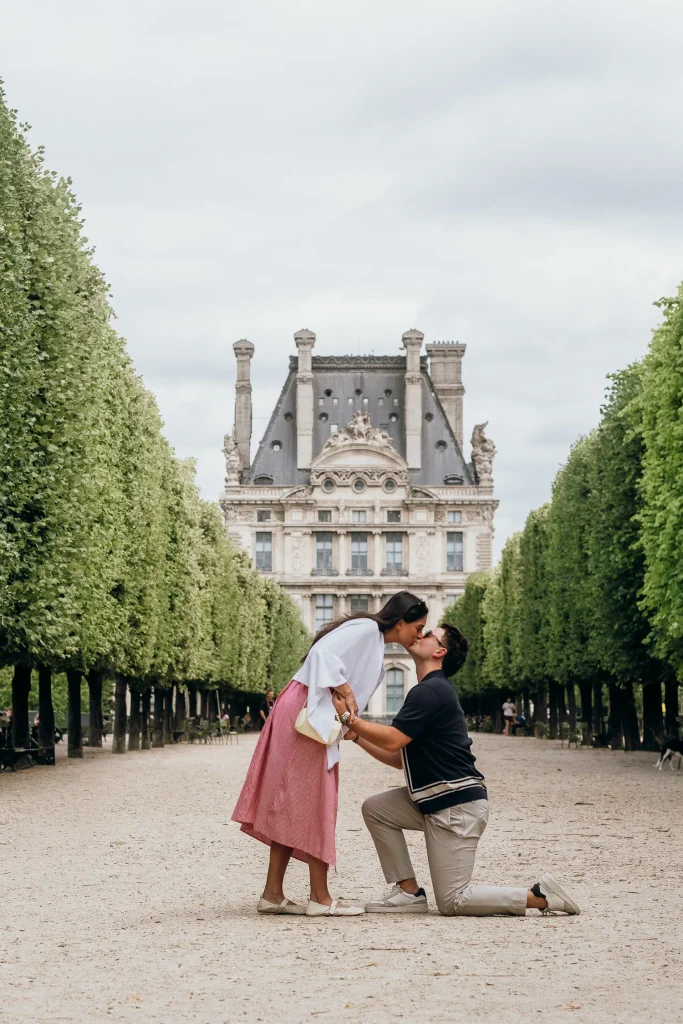
Beyond those, the Jardins du Trocadéro, the Tuileries and Montmartre all work beautifully for different reasons. Our full guide to proposal spots covers 22 of them.
What to tell your partner about clothes
You can’t say “wear something nice, we’re being photographed.” So:
- Book dinner somewhere good that evening and mention it in the morning. People dress for the day ahead.
- Suggest the walk is the photo opportunity of the trip. That’s usually enough.
- If you’ve used the photoshoot cover story, this solves itself.
For you: check your pockets. A ring box makes an obvious rectangle in a fitted jacket. A coat pocket is safer, and we’ve watched a jacket pocket give the game away more than once. More on what to wear.
The questions people ask us
What if she says no? It happens vanishingly rarely, and if it does, we stop photographing immediately; we don’t approach, and you’ll never hear about the images again. That’s a promise, and it’s part of why we agree on everything in advance.
What if she spots you? Rare, and usually recoverable — we’re just people with a camera among thousands in Paris. If someone does clock us, we’re photographing the bridge. The signal system means we never need to acknowledge you.
What about the weather? Rain is not the disaster you’re imagining. Fewer people, reflective ground, and an umbrella you can hide under. Here’s the full case for it.
Can you film it as well? Yes — we can film the moment on a phone alongside the photographs. Every couple who’s skipped it has asked afterwards whether we happened to.
How far ahead should we book? The earlier the better for sunrise slots, particularly April to October. But write to us regardless — we take only three sessions a day each, and we’d rather tell you honestly than have you assume.
Frequently asked questions
How does a surprise proposal photoshoot work? The photographer arrives early and works from a distance, appearing to be an ordinary tourist. You give a small pre-agreed signal, propose, and everything from your arrival onward is photographed. The photographer introduces themselves afterwards.
How does the photographer stay hidden during a proposal? Distance, ordinary appearance, and no eye contact. Everything — position, signal, timing, backup location — is agreed in advance so nothing needs to be communicated on the day.
What is the best cover story for a proposal in Paris? The most reliable is a couples photoshoot your partner knows about, since it explains the photographer and means they dress for it. A sunrise walk or a breakfast reservation also work well. Avoid anything out of character.
Where is the best place for a surprise proposal in Paris? Pont Alexandre III for grandeur and space to work discreetly, the lower quays of Île Saint-Louis or Port Debilly for privacy. All allow a photographer to work unnoticed.
What time should I propose in Paris? Sunrise. Landmarks are nearly empty, the light is soft, and there’s nobody in the background of your photographs.
Should I book extra time after the proposal? We’d recommend it. Thirty minutes captures the moment itself; an hour or two also captures the first hour of being engaged, which tends to produce the photographs people love most.
When you’re ready
Tell us what you’re planning — where you’re thinking, what your partner is like, whether they’d love a camera or hate one. We’ll tell you honestly what we’d do.
Start planning your proposal → · Download our free proposal guide · See our prices


